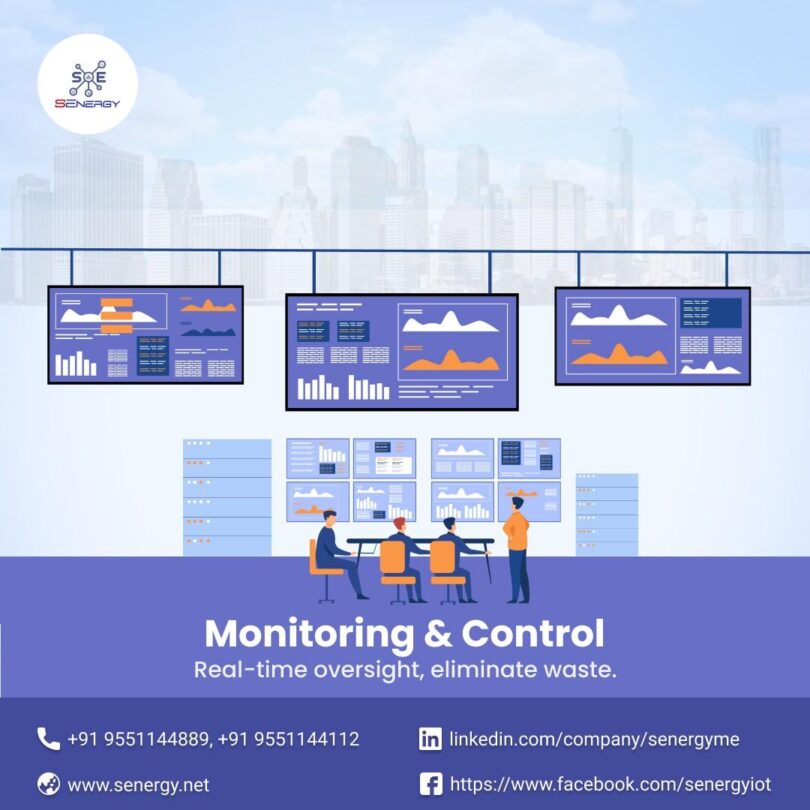

In today’s fast-paced industrial and commercial environments, waste is more than just an operational inefficiency—it’s a direct hit to profitability, sustainability, and competitiveness. Organizations across sectors are realizing that the key to eliminating waste lies in real-time oversight powered by the Internet of Things (IoT).
Why Real-Time Oversight Matters
Traditional monitoring systems often rely on periodic checks, manual reporting, or delayed analytics. By the time inefficiencies are detected, valuable resources—energy, materials, or time—have already been wasted. Real-time oversight changes this paradigm by enabling instant visibility and control over processes, equipment, and resource flows.
- Immediate detection of anomalies (e.g., energy spikes, machine downtime, or material leaks)
- Faster response times to prevent small issues from escalating into costly problems
- Continuous optimization of operations rather than reactive adjustments
IoT as the Backbone of Smart Monitoring
IoT devices—sensors, meters, and connected controllers—act as the eyes and ears of modern operations. By embedding these devices across facilities, organizations can capture granular data streams that provide actionable insights.
- Energy Monitoring: Smart meters track consumption patterns, flagging inefficiencies in HVAC, lighting, or production equipment.
- Process Control: Sensors monitor temperature, pressure, and flow to ensure processes stay within optimal ranges.
- Predictive Maintenance: IoT-enabled machines send alerts before breakdowns occur, reducing downtime and repair costs.
- Supply Chain Oversight: RFID tags and GPS trackers provide real-time visibility into inventory and logistics, minimizing waste from overstocking or delays.
Control Systems for Waste Elimination
Monitoring alone is not enough—control systems must act on the data. IoT platforms integrate with automation systems to close the loop between detection and correction.
- Automated Adjustments: Smart controllers can instantly reduce energy loads, reroute materials, or recalibrate equipment.
- Remote Management: Operators can intervene from anywhere, ensuring oversight even across distributed facilities.
- AI-Driven Optimization: Machine learning algorithms analyze IoT data to recommend or implement efficiency improvements.
Sustainability and Cost Savings
The benefits of IoT-driven oversight extend beyond operational efficiency. By eliminating waste, organizations achieve:
- Lower operational costs through reduced energy and material usage
- Improved sustainability metrics by cutting emissions and resource consumption
- Enhanced compliance with environmental and industry regulations
- Greater resilience against supply chain disruptions and resource scarcity
The Future of Smart Oversight
As IoT technology evolves, the integration of edge computing, AI, and digital twins will make real-time oversight even more powerful. Businesses that embrace these innovations will not only eliminate waste but also unlock new levels of agility, sustainability, and competitiveness.
At Senergy [ www.senergy.net ] , we believe that real-time IoT oversight is the cornerstone of modern efficiency. By combining monitoring with intelligent control, organizations can transform waste into opportunity—driving both profitability and sustainability in the digital age
Visit www.senergy.net for more informations